

We’ve spent years as individuals tracking sleep. Most tools we use do the same thing. They tell you how you slept. They give you a score. Maybe a suggestion. Then they stop. That’s been the limit. The next step in sleep monitoring is different. It’s not more insight. It’s actual intervention. One of the first places this is starting to work is the bed itself; and companies like Sleep Number are beginning to show what that looks like in practice.
The promise of AI has always been that it would help us perform better. In practice, most systems still sit on the sidelines. They observe, report, and recommend. They don’t change the outcome.
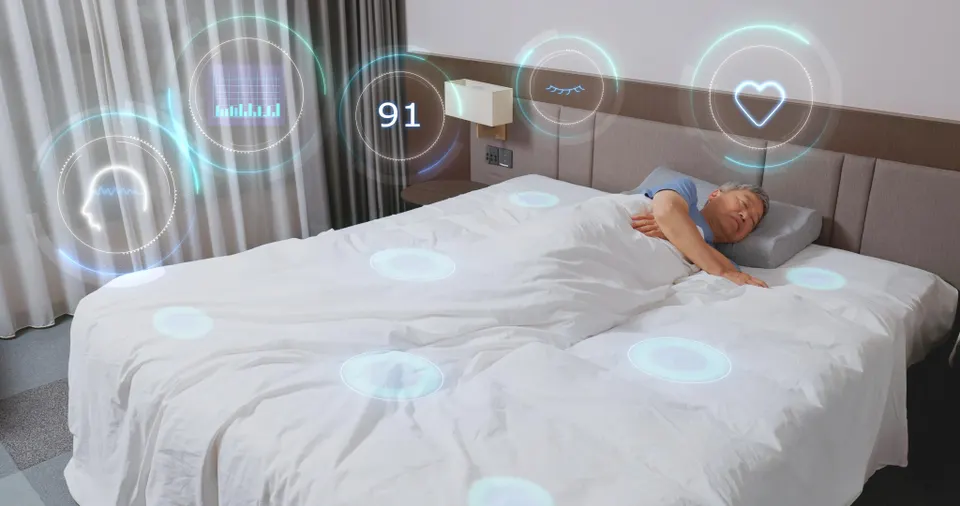
Sleep is beginning to shift that model. Today’s sensor-enabled beds can detect movement, breathing patterns, heart rate, and temperature. That part is no longer novel. What matters is what happens next. If you roll over in the night, the bed adjusts the support under your shoulders and hips so you don’t wake up from discomfort. If you sleep too hot or cold, automated temperature programs adjust temperature throughout the night to keep you comfortable. It happens without you doing anything. That’s the difference. The bed isn’t informing you. It’s acting on your behalf.
In most organizations, we’re still thinking about AI as a tool. Something you consult. Something you prompt. That’s not where this is going. The more useful model is a system that stays with the work, pays attention, and makes adjustments in real time.
Sleep is a clean example of this. As Sleep Number CEO Linda Findley described it, the goal is simple: “Let’s not just tell you how you slept. Let’s actually improve your sleep.” You can start to see where it leads: If you move, the mattress adjusts support to help your body settle. If you’ve been training, it changes how your body is positioned and cooled overnight. If you eat late, it can adapt your position to make sleep easier while your body catches up.
None of this requires a decision in the moment. The mattress handles it. That’s closer to what people mean when they talk about AI being a “chief of staff.” Not something that tells you what to do. Something that makes things work better in the background.
There’s one variable that shows up again and again in sleep quality: temperature. Most products address this in a passive way like materials that claim to stay cool and fabrics that pull heat away. That helps, but it’s limited.
What’s more effective is active control. Systems that change temperature across the night based on what your body needs. Sleep Number’s Climate collection mattresses, for example, actively manage heating and cooling across the night rather than relying on passive materials alone. The body doesn’t want the same environment all night. It needs warmth to fall asleep. It needs cooling for deeper sleep. It needs a gradual shift again as you wake.
When that’s handled automatically, the effect is meaningful. One Sleep Number mattress that combines temperature control with real-time adjustment of the bed reports an average of 52.5 additional minutes of restful sleep per night. That’s not about sleeping longer. It’s about making the time you already spend in bed more restorative.
Most companies still treat sleep as a personal matter. Something outside the scope of work. That doesn’t hold up. If someone is consistently under-rested, it shows up everywhere:
We spend time optimizing workflows, tools, and meetings. But we ignore the basic conditions that determine whether any of that works. Better sleep is one of the simplest ways to improve performance. It’s also one of the most overlooked. There’s a reason some leaders are starting to push back on the idea that long hours equal commitment. The tradeoff is too expensive.
The scale of data in this space is already significant. Sleep Number has collected 40 billion hours of sleep data. At that level, patterns become clear. You can begin to see early signs of illness. Changes in recovery. Signals that something is off before it becomes obvious.
That opens up new possibilities. Not just for individuals, but for how we think about health and performance more broadly. But the value isn’t just in prediction. It’s in what the system does with that information.
Most AI systems still rely on the user to close the gap between insight and action. That’s the part that often breaks. The more useful standard is simple: Does the system improve the outcome without asking for more effort?
Sleep is one of the first areas where that standard is starting to be met. The system observes. It adjusts. It improves the result. No extra steps. No new behavior required.
This isn’t really about sleep. It’s about how systems are designed. We’re moving toward environments that don’t just provide information, but actively support better outcomes while work is happening.
Sleep is an early example because the feedback loop is clear and the environment is controlled. Work is more complex. But the direction is the same. The systems that matter will be the ones that don’t just tell people what to do. They’ll be the ones that make it easier to do it well.
Originally published at Forbes